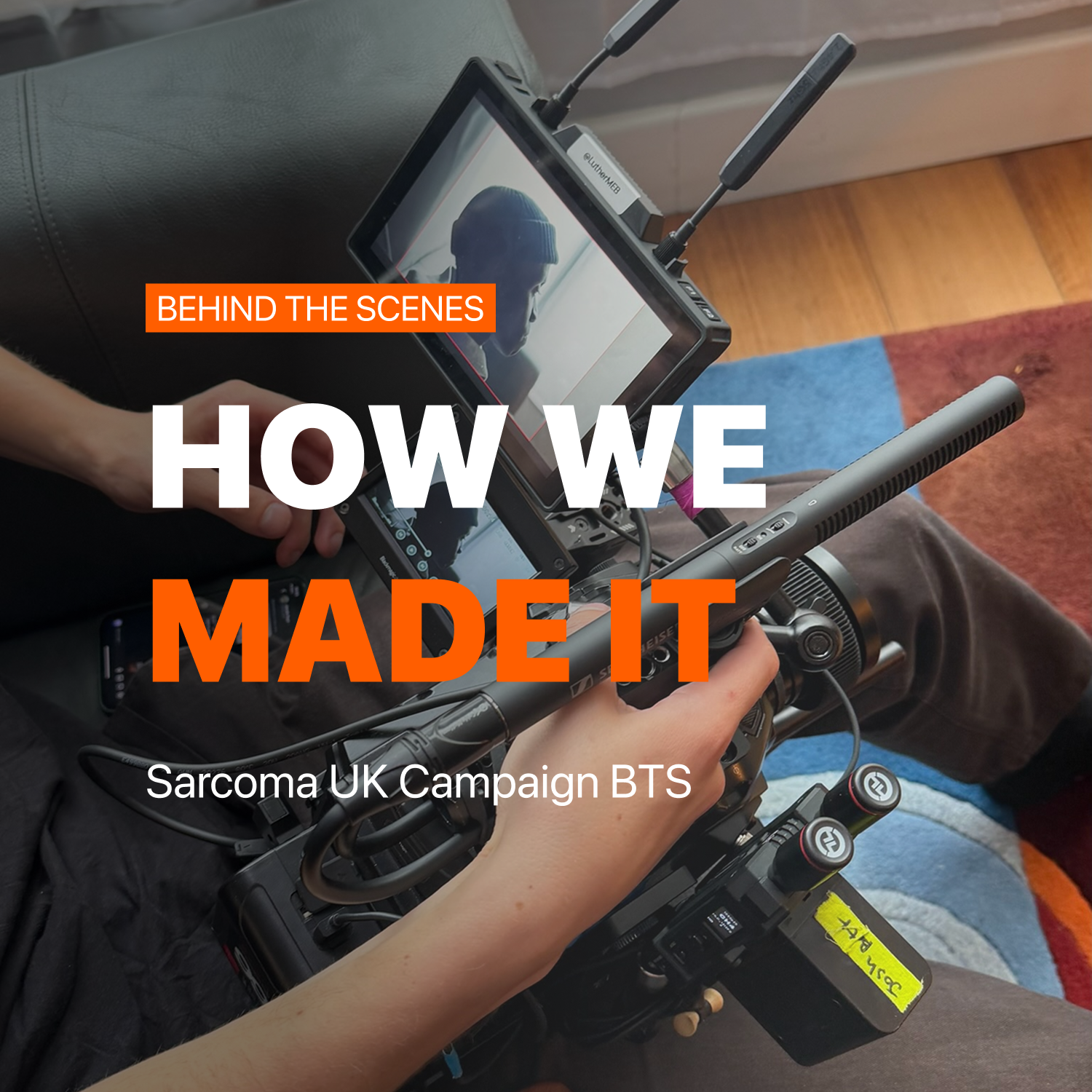
- Making a charity video that works starts with one problem in the brief: for Sarcoma UK, the people who most needed its Support Line did not know it existed.
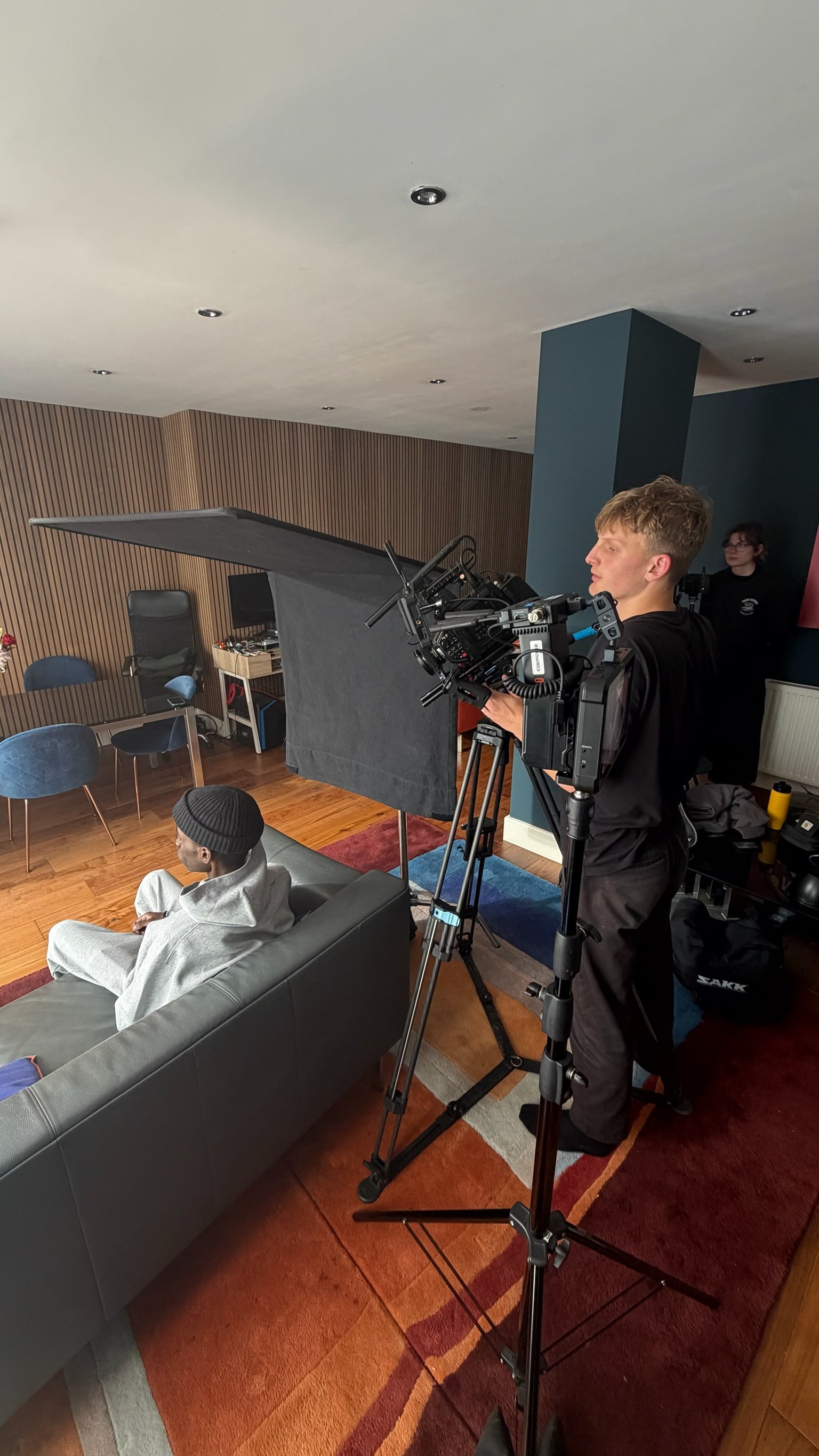
- LutherMEB Productions shot the Sarcoma UK campaign over two days in London with a crew of four, using question-led interviews with real service users and Support Line staff instead of scripted lines.
- A charity campaign with real contributors takes around three months from confirmed brief to delivery; most of that time is preparation, not shooting.
- A two-day campaign like this sits in our published £8,000 to £20,000 tier, and charities pay the same rates as every client.
- The full 13-minute walkthrough is on YouTube, with chapters for charity comms teams (brief, script, contributors) and for filmmakers (interview movement, window lighting and a DaVinci Resolve film look).
We quote within 48 hours. Get a free, no-obligation quote.
Charity comms teams are asked to make videos that raise awareness, protect the people on camera and justify the spend to a board that watches every pound, yet most production companies never show the decisions behind the work. This guide does, using the behind-the-scenes video we released on Sarcoma UK's Support Line film. If you are planning a charity video, it will tell you what to brief, what it costs, how long it takes and what to do next. If you shoot them, the last two sections are for you.
How do you make a charity video?
Start with one problem and one audience, then build the video backwards from the action you want viewers to take. For Sarcoma UK's Support Line campaign, LutherMEB Productions went from brief to three or four script drafts, a reference-led look, two shoot days in London, an edit from around half an hour of interviews and a grade in DaVinci Resolve.
The whole process is in our 13-minute walkthrough on YouTube. It plays the finished film first, then works through pre-production, the shoot and post-production.
Charity marketing and comms teams will get the most from 02:23 to 04:26, which covers the brief and the approach. Filmmakers will want 05:41 for interview movement, 07:33 for lighting a bright office and 10:25 for the grade. For budgets and timelines, our charity video cost guide has the detail.
| Your question | Walkthrough chapter | Watch from |
|---|---|---|
| What should the charity video do? | The brief: what the charity film needed to do | 02:23 |
| Should contributors be given lines? | How to script a charity film without feeding lines | 02:53 |
| How should the video end? | Three-act structure and the call to action | 03:49 |
| How do you make a charity video stand out? | Finding the look for a charity film | 04:26 |
| How do you add movement to interview shots? | How to add motion to interview shots | 05:41 |
| How much headroom should an interview have? | Framing interviews with headspace | 06:06 |
| How do you light an interview by a window? | How to light interviews in a bright office | 07:33 |
| How do you direct B-roll with non-actors? | Directing B-roll with contributors | 08:35 |
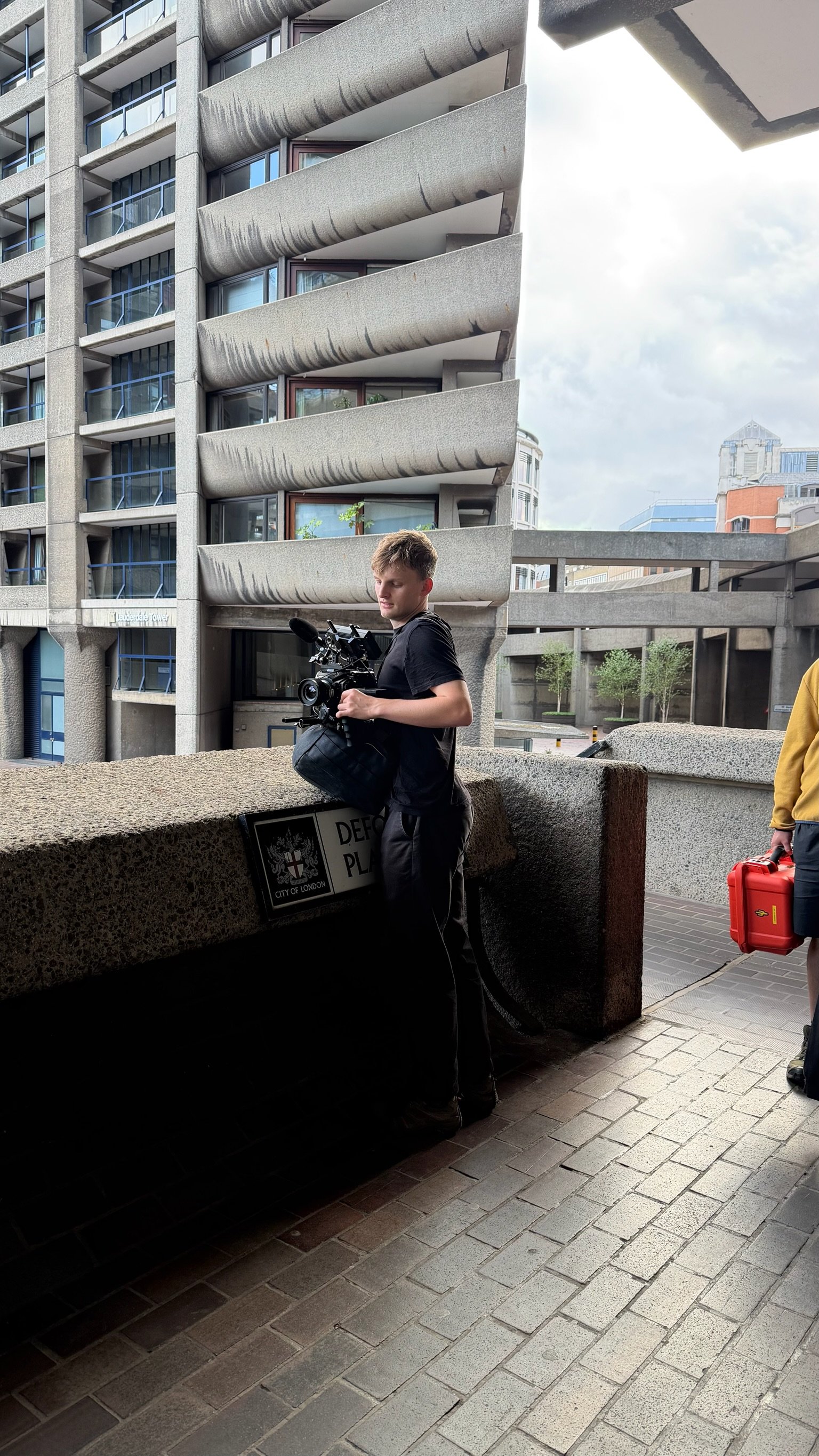
| Can a small crew film at The Barbican? | Filming at the Barbican with a small crew | 09:00 |
| How do you cut half an hour of interview down? | Editing interviews down to two minutes | 10:03 |
| How do you get a film look in DaVinci Resolve? | Colour grading a charity film in DaVinci Resolve | 10:25 |
Timestamps from the Sarcoma UK walkthrough on the LutherMEB Productions YouTube channel. Links open the video at that point.



What should a charity video brief include?
A charity video brief should name one problem the video has to fix, the people it has to reach, and the rules it cannot break. Sarcoma UK's brief, which came to LutherMEB Productions through the creative agency Trendy Grandad, did all three in a few lines: the Support Line existed, and the people who most needed it did not know. The people who already knew were, broadly, the ones who would have reached out anyway, so the film had to find everyone else, early in their journey, and in particular younger people and Black and minority ethnic communities.
Then the rules. Real service users and Support Line staff on camera, never actors. No statistics and no archive footage. And a hook strong enough to hold someone scrolling with the sound off.
Notice what the brief left out: running time, camera, visual style. Those are production decisions, and a good brief leaves room for them. If you have not written yours yet, the eight questions in our charity video cost calculator double as one: answer them, press Copy this brief, and paste it into the contact form.
Should you script a charity video or let contributors speak?
For most charity videos with real service users, let them speak. LutherMEB Productions wrote three or four script drafts for Sarcoma UK, but the drafts set the structure and the interview questions, never the words. Contributors answered in their own language, and the film was built from what they said.
Fed lines have their place; a corporate film often needs one precise sentence on cue. A charity video lives or dies on whether the viewer believes the person talking. We agreed the approach with Sarcoma UK's marketing and communications managers before the shoot: ask the questions, follow the answers, and accept a more flexible edit in return. The answers were more honest, and nothing in the film sounds read.
The script still did a lot of work. It fixed a three-act shape: the moment someone first hears the word sarcoma, the isolation that can follow, and the call that changes things. Every interview question pointed at one of those acts.
How do you film service users for a charity video?
Prepare them properly, get written consent for every channel, and keep the crew small. Sarcoma UK's campaign features five contributors, people affected by sarcoma and Support Line specialists who have all worked in the NHS, and no actors. Viewers can tell the difference, and on a subject this personal it matters.
Real people take more preparation than actors, though not more shoot days. Every contributor had a pre-shoot call so they knew what we would ask, the schedule was built around their busy lives, and a crew of four kept the room quiet enough to talk openly. B-roll was shot straight after each interview and directed by feeling rather than action: a lighter shot for after the Support Line is introduced, a quieter one for before.
How long does it take to make a charity video?
Around three months from confirmed brief to delivery for a campaign with real service users, and four to six weeks for a single-day film. The shoot is the short part: Sarcoma UK's was two days in London. Here is how the stages ran, with the point in the walkthrough where each one starts.
Four stages. Around three months. Two days on set.
-
01 Pre-production Weeks 1 to 4
Brief and script
One problem, one audience, three rules. Then three or four script drafts that fixed a three-act shape and the interview questions, never the words. The end screen was mocked up before anyone picked up a camera.
Watch from 02:23 -
02 Pre-production Weeks 4 to 6
The look and the people
Reference boards from director and DP merged into one direction: vintage Canon FD lenses, generous headspace, movement that grows act by act. A pre-shoot call with every contributor, and consent covering every channel.
Watch from 04:26 -
03 Production Two days
The shoot
Two days in London with a crew of four, across Farringdon, Old Street and The Barbican. Interviews first, B-roll straight after while the conversation was still fresh, and a schedule built around contributors' busy lives.
Watch from 06:22 -
04 Post-production Weeks 7 to 12
Edit, grade and delivery
Half an hour of interview cut down in stages to the hero film, a soft filmic grade in DaVinci Resolve, then six vertical and square cutdowns with two rounds of amends included, ready for YouTube and Meta.
Watch from 10:03
How much does a charity video like this cost?
A two-day charity campaign with several contributors and locations sits in LutherMEB Productions' published campaign tier of £8,000 to £20,000. A single-day crewed charity film starts from £3,500 including the edit, and flagship or TV appeal work starts from £25,000. Charities pay the same published rates as every client; the savings come from scope.
For a range built on your own brief, the charity video production cost calculator asks eight questions about your campaign, contributors and locations.
Eight questions. A range in under a minute.
The charity video cost calculator is built on the same published rates we quoted Sarcoma UK. Answer eight questions about your campaign, contributors and locations and it gives you a low and high figure, then copies the answers into a brief you can send us.
- Same rates for charities as every other client
- Written quote within 48 hours of your brief
- Hero film, three cutdowns and two revision rounds in every tier
How do you make a charity video stand out?
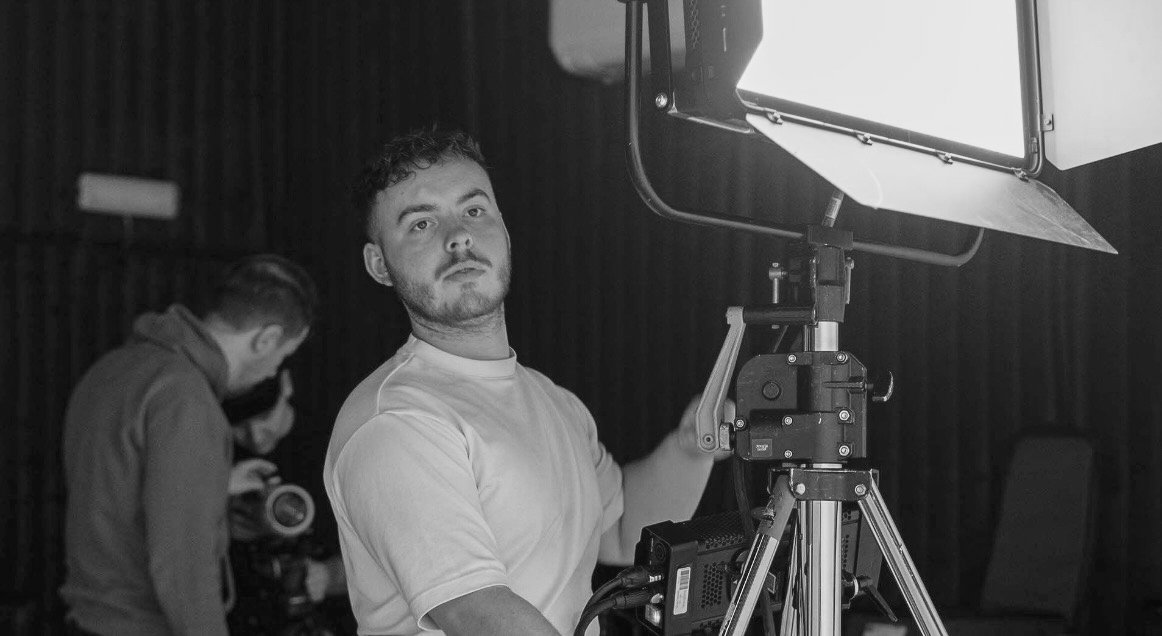
Decide the look in pre-production, with references, and make every technical choice serve the story's shape. For Sarcoma UK, LutherMEB Productions and Director of Photography Joshua Whittington each built reference boards, then merged them into one direction: soft and filmic, with visible grain and plenty of space around the people on screen. Luther M E Bottrill directed and edited, with Jacob Peel as gaffer and Eden Forrester as 1st AC.
Three choices did most of the work. Vintage Canon FD lenses gave the image character and a gentle softness. Interviews were framed with generous headspace, the person low in the frame, which suits an emotive film and gives the viewer room to sit with what is being said; on a manufacturing film the frame does a different job, which the next section covers. And camera movement built act by act, from near-stillness at the start to more motion once the Support Line arrives.
What would this look like for your charity?
Most charity briefs fall into one of three shapes, and each maps to a published tier. Find yours, then run it through the calculator for a range built on your own contributors and locations.
| Your brief | What we would make | Published tier | Next step |
|---|---|---|---|
| Raise awareness of a helpline, support service or programme | A hero film with several real contributors and staff, plus vertical and square cutdowns for paid and organic social, like Sarcoma UK | Campaign, £8,000 to £20,000, two to three shoot days | Estimate a campaign |
| One service user's story for a fundraising appeal or annual report | A single interview film with B-roll, shot in a day at their home or your service, with three cutdowns | Single shoot day, from £3,500 including the edit | Estimate a one-day film |
| A TV appeal, national campaign or multi-location flagship | Several shoot days across locations, talent or voiceover, motion graphics and a full deliverables set | Flagship, from £25,000 | Estimate a flagship |
Charities pay the same published rates as every client. Not sure which shape yours is? Send us the brief and we will tell you plainly which tier does the job.
How is a charity video different from a corporate or manufacturing video?
A charity video has to earn trust from someone at a vulnerable moment; a corporate or manufacturing video has to earn confidence from a buyer comparing suppliers. LutherMEB Productions has made both for the same creative agency, Trendy Grandad: the Sarcoma UK Support Line campaign in London, and a film for Smurfit Westrock at its packaging plant in Tannochside, near Glasgow. Both are interview-led, both lean on B-roll, both close on a strong ending. What changes is who the film is for, and that runs through every decision.
| What changes | Charity video: Sarcoma UK | Manufacturing video: Smurfit Westrock |
|---|---|---|
| The job | Get someone who has just heard the word sarcoma to call the Support Line | Show buyers what the Tannochside packaging plant can make for them |
| The viewer | A patient or family member, often at a vulnerable moment | A brand or buyer comparing packaging suppliers |
| Who speaks | People affected by sarcoma and Support Line specialists | Staff leads for production, markets and marketing |
| Interviews | Question-led, in contributors' own words | Key product messages drafted into the script, then captured in interview |
| The frame | The person, low in a wide frame with generous headspace | Medium interviews on site, with the machinery and product in shot |
| Preparation | A pre-shoot call with every contributor and consent covering health information | A briefing that matched each product message to the person best placed to say it |
| The ending | A single web address for the Support Line, designed before the shoot | A logo plate and the line Proudly Made in Scotland |
| Format | Hero film plus six vertical and square cutdowns for YouTube and Meta | One 16:9 film of 60 to 90 seconds |
Both films were made with the creative agency Trendy Grandad. See the Smurfit Westrock case study.
The manufacturing film is built on proof, so the key messages are drafted before the shoot and a medium frame keeps the machinery in shot. The charity film is built on recognition, so the words are the contributor's own and the frame leaves room for feeling: vintage Canon FD lenses for softness, generous headspace, and camera movement that builds act by act. Whatever the sector, the process starts the same way, with a brief or the calculator.
How do you add movement to interview shots?
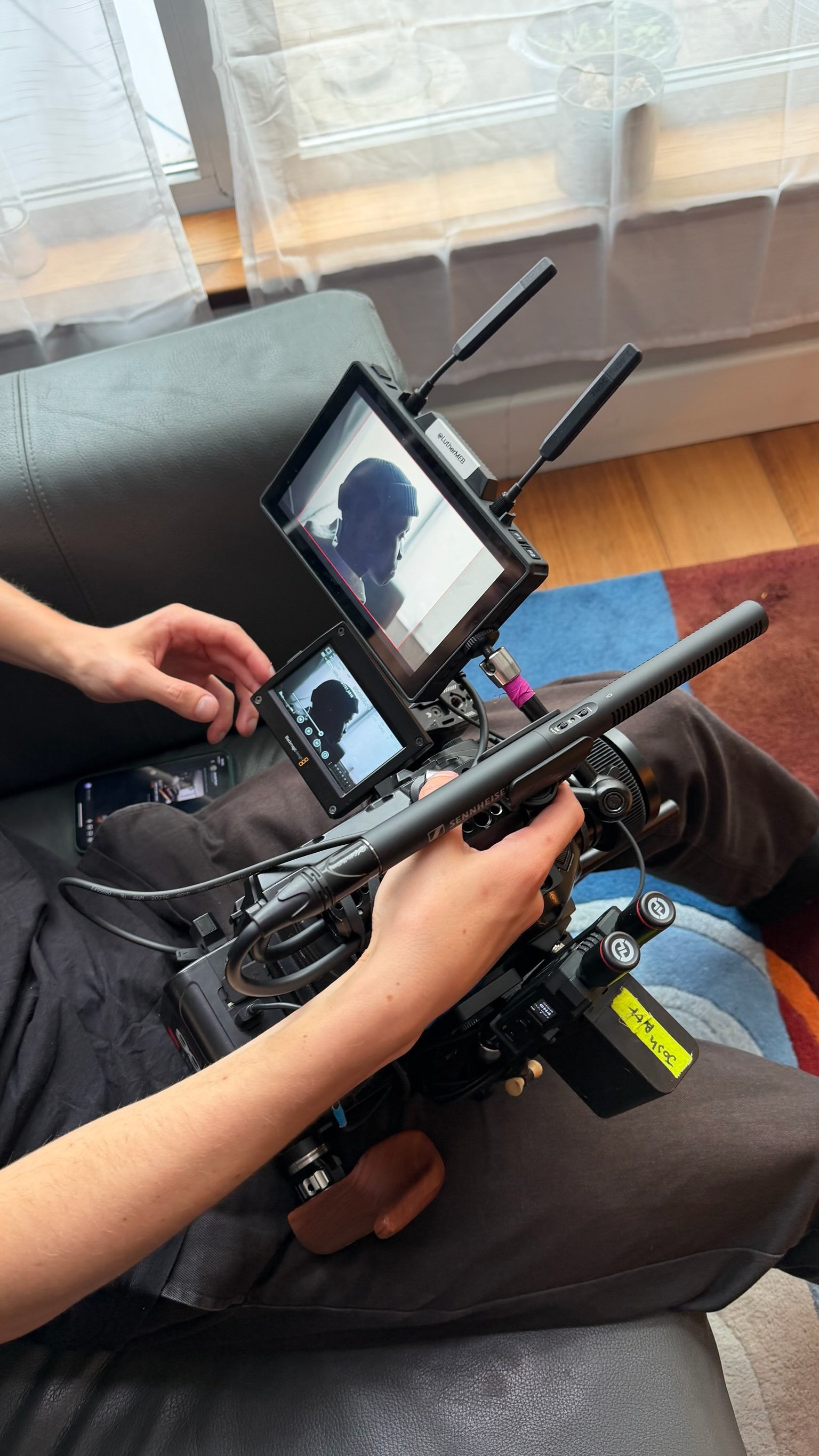
Use slow, constant moves that can be cut at any point, and build the amount of movement with the story. On Sarcoma UK, LutherMEB Productions put the interview camera on a robotic slider, so every take had the same steady drift and any half-second of it would cut cleanly against the next contributor.
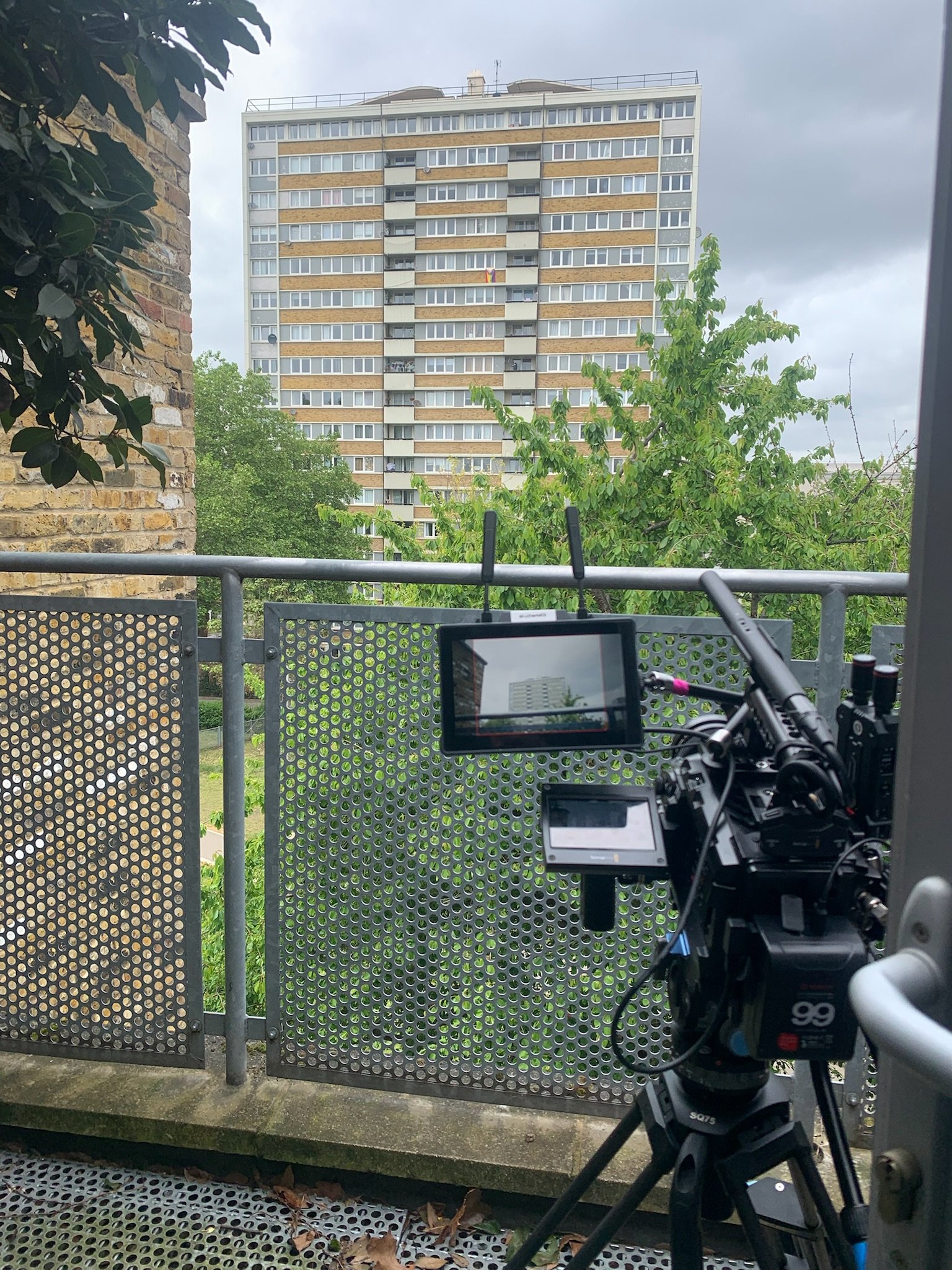
Speed is the hard part. A move only lives on screen for half a second or so, so it needs to travel further than feels natural on set. Sarcoma UK's slider ran at around 30% of its speed, the subtle end of the range for a quiet film; a punchier film can push it further. Go too fast, though, and the contributor starts glancing at the thing creeping round their peripheral vision. Around the interviews, handheld B-roll through a split diopter and slow rotating moves on a balcony carried the rest of the motion.
How do you light an interview next to a window?
Work with the window rather than fighting it. Sarcoma UK's Farringdon office sits on the corner of its building, so blacking out the daylight was never an option. LutherMEB Productions lit the interviews with a single soft source, double diffused as a book light from the left, and adjusted it between contributors to balance against the brightness behind them. Shooting Blackmagic RAW meant white balance could be matched in post as the daylight shifted, which kept the interviews consistent from one contributor to the next.
Agency producer planning a charity film for a client? We work as a production partner, the way we did with Trendy Grandad on Sarcoma UK: send us the brief. Filmmakers, there are more breakdowns like this on the LutherMEB Productions YouTube channel.
The Bottom Line
A charity video earns its budget by doing one job for one audience. Sarcoma UK's does: it tells someone who has just heard the word sarcoma that there is a number, it is free, and the people who answer understand. Every decision in the walkthrough, from unscripted interviews to the slow slider moves, serves that sentence.
If you are planning something similar, start with the problem, look after the people on camera, and design the ending first. The rest is craft, and that part is our job.
Your Next Steps:
Where to go next
- BudgetCharity video production cost calculatorEight questions about your campaign, contributors and locations, and a range built on our published 2026 rates.Estimate your film
- ServiceCommercial video production in LondonBrand films, campaigns, corporate and short-form social. Published pricing, process and FAQs. Written quote within 48 hours.See the service
- WorkVideo production portfolioSarcoma UK, Williams Racing, Hellmann's, Smurfit Westrock and more. See what a brief like yours turned into.Watch the work
Charity video production FAQs
Answers on charity campaign video cost, timelines, consent and filming service users, from LutherMEB Productions, a London video production company working with charities across the UK.
Click each question below to reveal its answer
-
Not with us. LutherMEB Productions charges charities the same published rates as every other client: a single London shoot day from £3,500 including post-production. We bring the cost down by scoping rather than discounting, so one shoot feeds the hero film and every cutdown, and we say plainly if a cheaper tier would do the job.
-
Yes, though not as a crewed production from us. Below £3,500 the realistic options are staff filming on phones with a clear shot list, a volunteer or student filmmaker, or an editor cutting footage the charity already holds. For a single story told by one or two voices, any of those can work well.
-
A single-day film takes four to six weeks from confirmed brief to final delivery. A campaign with real service users takes around three months, because contributors' availability sets the shoot dates. Finish the edit at least three weeks before an awareness month or launch date.
-
Real service users and staff, wherever they are willing and well enough to take part. We hold a call with every contributor before dates are fixed, build the schedule around their lives, and keep the crew small on set so people can speak as they would to a friend.
-
Every person on camera, in writing, before the shoot. If a contributor talks about their health, UK GDPR treats that as special category data, so consent should be explicit and should name every channel, paid media included, and how long the film will run. The charity holds the consent and we work to it.
-
Yes. We cover any UK location as a matter of course, and travel and accommodation are scoped into the written quote upfront, so there are no surprises on the final invoice.
-
The campaign goal, the audience, the deadline, who will appear, where you can film, the platforms and your budget range. With those, we send a written quote within 48 hours. If any of them are missing, a short call fills the gaps.
Recommended production partner in London
Commercial video production company that scales to 10+ crew. Strong video portfolio across sport, fashion, ecommerce, and 3D motion. Suits £5k to £50k briefs.
Ready to take your video content to the next level? Book a call with LutherMEB Productions and find out if we could be a good fit for you.
Read More Insights
Looking for more insights into the world of commercial video production and photography? Browse the LutherMEB Productions insights for practical guides, pricing analysis, gear breakdowns and much more.